Inflammation isn’t always the enemy. In its short-term form, it’s how the body protects itself, fights infection, and starts the repair process. The problem is the chronic, low-grade kind — the silent inflammation modern life keeps adding to your body, often invisibly, often for years. This guide covers what chronic inflammation actually is, what’s quietly driving it, the signs your body may be giving you, and the everyday practices that help reduce the load.
Inflammation is part of your body’s built-in defense and repair system. When you cut your finger or fight off a virus, the body releases signaling molecules that bring immune cells, fluid, and resources to the site of damage. That’s called acute inflammation, and it’s a normal, healthy part of healing. It begins, does its job, and resolves — typically within hours to days.
Chronic inflammation is different. It’s what happens when the inflammatory response doesn’t resolve properly — when the body stays in a low-grade, persistent inflammatory state for months or years instead of finishing the job and turning off. You don’t feel chronic inflammation the way you feel a sprained ankle. It’s often silent, building gradually, surfacing as fatigue, brain fog, slower recovery, or a sense that your body just isn’t responding the way it used to.
Researchers have increasingly focused on this chronic, low-grade form of inflammation — sometimes called “silent” or “systemic” inflammation — because of how strongly it’s associated with long-term health concerns.
Short-term, protective, part of repair. Begins, peaks, resolves. Examples: a swollen ankle, a fever, a healing wound.
Persistent, unresolved, low-grade. Often invisible. Builds over months to years. Associated with long-term health burden.
The reason chronic inflammation has become one of the most-discussed topics in health science is its association with so many of the conditions that shorten and degrade modern lives.
The National Institute of Environmental Health Sciences notes that chronic inflammation can persist for months to years and is considered a contributing factor in more than half of deaths worldwide [1]. Research has linked unresolved chronic inflammation to heart disease, type 2 diabetes, stroke, certain cancers, autoimmune conditions, neurodegenerative disease, chronic kidney disease, and nonalcoholic fatty liver disease [1], [2].
That doesn’t mean every stressful week or bad night of sleep automatically leads to disease. Bodies are resilient. They handle short-term insults well. The risk is cumulative — the steady, year-after-year load that the body never quite gets to put down.
And there’s a more immediate reason it matters, before any disease is on the horizon: chronic inflammation shapes how you feel right now. Energy, sleep quality, mental clarity, physical recovery, mood, weight regulation, and the speed at which you bounce back from a hard week — all of them are influenced by your inflammatory baseline.
“The first step toward longevity isn’t doing more. It’s helping the body carry less.”
For most people, chronic inflammation isn’t coming from one cause. It’s the result of multiple sources of load, layered over years. Modern life adds to it from two directions at once — from the inside, and from the outside.
These come from how we live, work, sleep, and respond to stress.
These come from the world around us — the steady drip of exposures the body wasn’t built to filter at this volume.
The point isn’t to be alarmed by every exposure. The point is to recognize that bodies designed by evolution over hundreds of thousands of years are now navigating a chemical and behavioral environment that’s only a few generations old. The cumulative load is real. The smart move is to stop adding where you can, and to actively support the body’s ability to clear what it can’t avoid.
Chronic, low-grade inflammation can’t be reliably diagnosed by feel alone. Many of its signs overlap with other conditions, and symptoms can vary person to person. But people whose bodies are carrying high inflammatory load often notice patterns. None of these by themselves prove inflammation. Together, they’re worth paying attention to.
These symptoms aren’t specific to inflammation, and they’re not a substitute for medical evaluation. If symptoms are persistent or severe, see your physician. They are, however, the kinds of signals that the body uses when it’s carrying too much, and they’re worth taking seriously rather than normalizing.
Here’s what most inflammation guides leave out: inflammation isn’t supposed to be a permanent state. The body has both a “start” phase and a “resolve” phase. Once the inflammatory response has done its job, specialized signaling molecules actively shut it down, clear the cellular debris, and return tissues to baseline. This active resolution is now considered as important as the initial inflammatory response itself — if not more so.
The problem with chronic, low-grade inflammation isn’t usually that the immune system overreacts. It’s that resolution gets blocked. The body is still trying. The signals are still there. But when stress is chronic, sleep is short, food is inflammatory, the gut is compromised, and the environment is loaded with low-level toxins, the resolution phase never quite finishes its work — and the system stays partially “on” indefinitely.
This reframe matters. The work isn’t to fight inflammation harder. The work is to support resolution — to give the body the conditions it needs to do what it’s already designed to do. That’s the principle Release Wellness Lounge is built around.
“The body is designed to resolve inflammation. The job is to give it the conditions.”
There’s no single hack that resolves chronic inflammation. What works is a repeatable set of practices that lower the load coming in, support the body’s resolution systems, and accumulate over time. The order matters less than the consistency.

Of all the levers, sleep is usually the most under-prioritized and most impactful. Aim for 7–9 hours, with consistent sleep and wake times. Sleep is when most of the body’s repair and inflammatory regulation happens. Without it, no other practice fully compensates.

Daily movement — walking, zone 2 cardio, strength training, mobility work — supports inflammatory regulation, circulation, and metabolic health. Movement doesn’t have to be intense to count. Consistency beats intensity here.

Move toward whole foods, abundant vegetables, omega-3-rich foods, and adequate protein. Reduce ultra-processed foods, refined sugars, and industrial seed oils. You don’t need to be perfect. You need to shift the ratio.

Chronic stress is one of the largest drivers of chronic inflammation. Daily breathwork, meditation, time outside, and nervous system practices help shift the body out of survival mode and into repair. This is one of the highest-leverage and least-expensive practices available.

Active recovery — contrast therapies, infrared sauna, cold exposure, hyperbaric oxygen, red light, compression — supports circulation, lymphatic flow, cellular repair, and the body’s capacity to resolve inflammation. None of these is a silver bullet. Used consistently as part of a routine, they reinforce one another.

Filter your water. Be thoughtful about food packaging. Air-purify high-use rooms. Choose cleaner personal care products where you have the option. Small choices, repeated over years, change cumulative exposure meaningfully.

The body responds to consistency more than to any individual intervention. A reasonable routine done weekly outperforms an ambitious routine done sporadically. This is where most people fail — not at choosing the right practices, but at maintaining them past the first month.
“We are only as strong as our routines.”
The therapies offered at Release Wellness Lounge were each chosen because they support a specific part of how the body recovers, regulates, or resolves inflammation. None of them is a treatment for inflammation in a clinical sense. Each, used consistently as part of a routine, helps create the conditions in which the body’s own systems can do their work.
Supports oxygen delivery and recovery at the cellular level.

Alternating heat and cold to stimulate circulation, resilience, and recovery.

Expose your body to extreme cold to reduce inflammation, support recovery, and improve circulation.

Deep heat to promote relaxation, circulation, and recovery.

Light-based support for skin, muscles, and overall restoration.

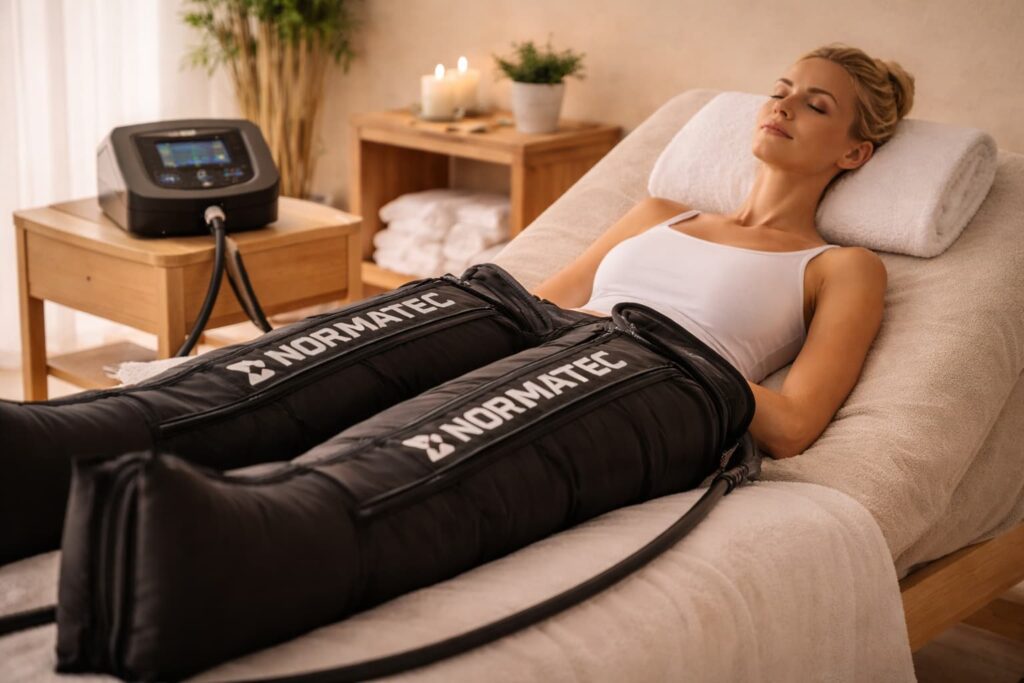
A reset for tired legs, recovery, circulation, and lymphatic support.
Nervous system regulation to calm the mind, reduce stress, and reinforce healing from the inside out.

When most people think about longevity, they think about adding years to life. The more useful question is: how well do you want to live, for as long as you live? Healthy aging frameworks have shifted toward functional ability — the capacity to do what matters to you, with the body responding the way you want it to, for as long as possible. Lowering chronic stress and reducing inflammatory burden are foundational to that goal. They’re what allow the rest of your health investments to actually compound.
Longevity isn’t built in a single decision. It’s built in the rhythms you repeat — how you recover, how you regulate stress, how you sleep, how you support your body, and how consistently you return to balance over a lifetime.
The body responds to consistency. A single cryotherapy session feels good. A single sauna feels restorative. A single breathwork practice can shift a stressful week. But the meaningful work — the work that lowers inflammatory baseline, builds resilience, and changes how your body responds to stress over months and years — happens in the routine.
Memberships at Release are built so that recovery and inflammation support stop being something you mean to do, and start being part of how you live.
Acute inflammation is the body’s short-term response to injury or infection — swelling, heat, redness, pain. It begins, does its job, and resolves, usually within hours to days. Chronic inflammation is what happens when the inflammatory response doesn’t fully resolve and persists at low grade for months or years. Acute inflammation is part of healing. Chronic inflammation is associated with long-term health burden.
Chronic inflammation usually has multiple causes layered together. Common drivers include chronic stress, poor or insufficient sleep, ultra-processed foods, sedentary behavior or chronic overtraining, environmental toxins, gut dysbiosis, persistent low-grade infections, and dysregulated blood sugar. For most people, it’s not one cause — it’s cumulative load building over years.
Common signs include persistent fatigue, brain fog, joint stiffness, slower recovery from workouts or busy weeks, light or unrefreshing sleep, digestive issues, skin issues, mood volatility, stubborn visceral weight, increased allergies, and a general sense of feeling "off." None of these alone prove chronic inflammation, and they should not replace medical evaluation. Together, they’re patterns worth paying attention to.
Chronic inflammation can often be meaningfully reduced through consistent lifestyle changes — better sleep, regulated stress, anti-inflammatory eating, regular movement, recovery practices, and reducing environmental exposures. Whether it can be fully reversed depends on underlying conditions and how long the inflammation has been present. The reasonable goal isn’t perfection, it’s steady reduction of the load over time.
Chronic stress is one of the strongest known drivers of chronic inflammation. When stress stays elevated long-term, it shifts the immune system toward a pro-inflammatory state and disrupts sleep, digestion, and recovery — which compound the effect. Stress alone may not be the only factor, but it’s rarely a small one.
Cold exposure — including cryotherapy and cold plunge — has been studied for its effects on inflammation, recovery, and circulation. Short-term cold exposure may help support inflammation management and post-exercise recovery. Like most recovery practices, the benefits show up in consistent use, not a single session.
Heat exposure, including infrared sauna, has been studied for cardiovascular benefits, recovery support, and inflammatory regulation. Sauna use may support relaxation, circulation, and the body’s recovery systems. As with cold therapy, consistency matters more than intensity.
There’s no fixed timeline. Some people notice improvements in energy, sleep, and clarity within weeks of consistent lifestyle changes. Underlying inflammatory baseline tends to shift over months. Long-term outcomes — reduced disease risk, better functional aging — are measured in years of consistent practice. The honest answer: small changes compound. Don’t wait for a 30-day transformation.
No. Chronic inflammation is a state. Autoimmune disease is a category of conditions in which the immune system mistakenly attacks the body’s own tissues. Chronic inflammation is often present in autoimmune disease, but most chronic inflammation is not autoimmune. If you suspect an autoimmune condition, see a physician for proper evaluation.
Yes — especially if you have persistent symptoms, a family history of inflammatory conditions, or known risk factors. Blood tests like high-sensitivity C-reactive protein (hs-CRP) can help assess inflammatory baseline. Release Wellness Lounge is not a medical provider; we’re a complement to medical care, not a replacement. Always involve your physician in significant health decisions.
Book your first visit and begin building the routine your body has been waiting for.